AUGMENTED REALITY
We have over a decade of experience in bringing Augmented Reality (AR) stories to life for a wide range of clients, ranging from The Washington Post to University College London.
An AR experience typically combines your phone’s camera view of the real world with overlaid audio, video, maps or 3D animated graphics, using custom triggers, your GPS location or even computer vision to recognise the buildings around you in order to start the experience.
Unlike many immersive experiences, augmented reality is ideally suited to communal, public experiences, which can be shared simultaneously without the need for additional hardware.
We provide a range of AR production services covering the entire pipeline from story conceptualization to storyboarding, modeling through to execution across a wide range of platforms.
Like what you see? Feel free to contact us to get a quote for creating your own custom AR experience.
UCL STORYSCAPE APP
We designed and produced University College London’s first everaugmented reality campus tour app for the 2024 Festival of Engineering. The app, which is still available for Android and iOS, guides the user around the Bloomsbury campus, showcasing 10 highlights from the Engineering department, from innovations in Sonar to invaluable contributions to the world wide web.
Geo-located points bring animated 3D models to life and feature audio interviews with leading researchers, as well as a selection of photogrammetry scans that were designed to interact with the environment around them. Users were able to take selfies with animated avatars as well as track their progress as they visited all 10 sites on campus. An “At home” version was also built in to allow those who couldn’t make it in person to the festival to bring the stories to life on a tabletop at home.
#STOPtrafficking2016
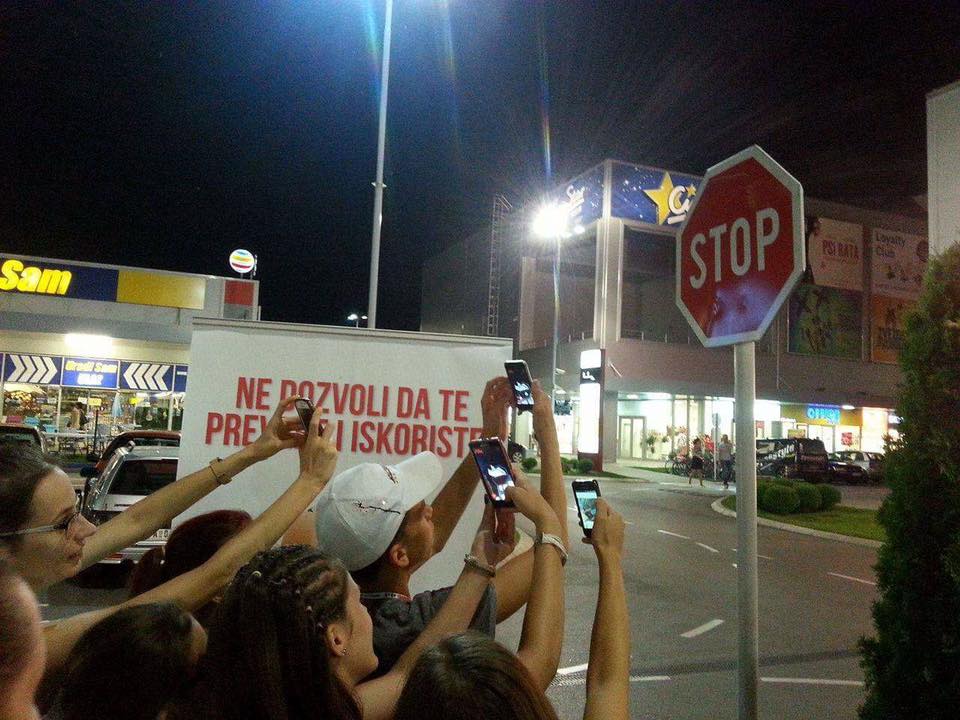
In collaboration with the ATTeam from the Red Cross Pancevo (part of the Red Cross Serbia), we created #STOPtrafficking2016 to raise awareness about the issue of
modern human trafficking. The AR experience was released on July 30, 2016 as part of the World Day Against Trafficking in Persons and explores the issue through the stories of three people affected by it. It uses traffic stop signs as triggers, and users can go up to a real world stop sign or a graphic of one to view the story. Read more here.
The Freddie Gray Arrest
For The Washington Post, we created a walkthrough of the events preceding Freddie Gray’s death after his arrest in Baltimore, Maryland on April 19, 2015. Using 3D models, audio, maps, court documents and witness testimony, users can better understand the complexities of the case and the disparities in the cases presented by the prosecution and defense in relation to Grey’s death.
The piece is narrated by Post local reporter Lynh Bui and was the first use of AR to report on a trial, published in May 2016. Read more here.
A Perilous Journey: An Augmented Reality Exhibition
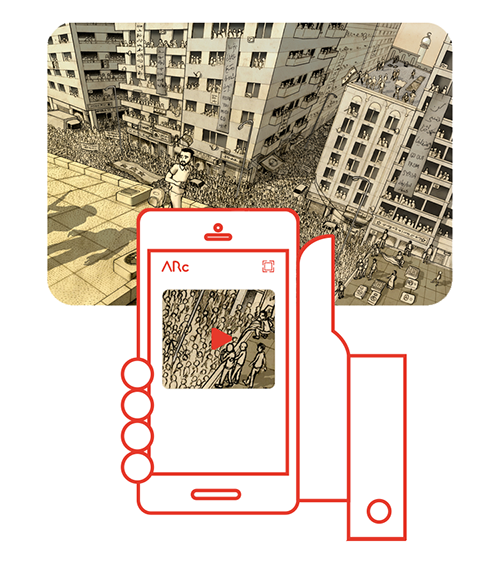

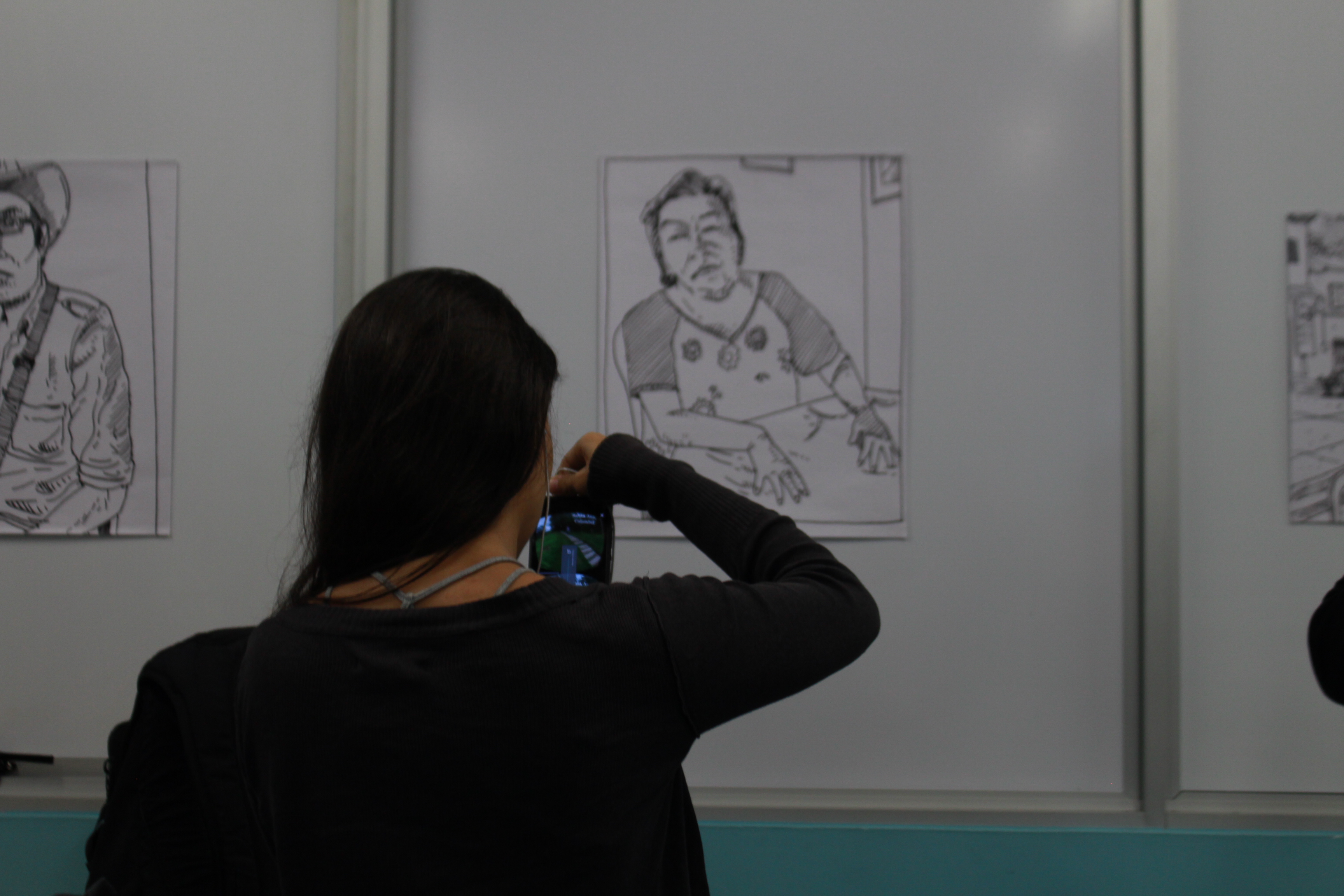
We partnered with Positive Negatives and the School of African and Oriental Studies (SOAS) in London to give a new angle to comics telling refugees’ experiences as they fled conflict and violence in their homelands.
Using ARc Stories, visitors to the exhibition were able to watch animated and live-action videos of the same stories as the artwork they aimed their smartphones at, adding a new layer of interactivity to the exhibition.
Read more here.
I Survived: The Colombian Conflict in AR
We used ARc Stories to guide users directly to our 360 videos of survivor testimonies of the Colombian conflict during our exhibition at the Center for Peace and Reconciliation in Bogota Colombia in September 2016. By aiming their smartphones at drawn portraits of those involved, users were taken directly to the video of that interviewee, seamlessly linking the drawn medium to the digital.
To see a demo of this AR-enabled VR viewer, click here.
To read more about the exhibition and its use of VR and AR here.
Eric Garner
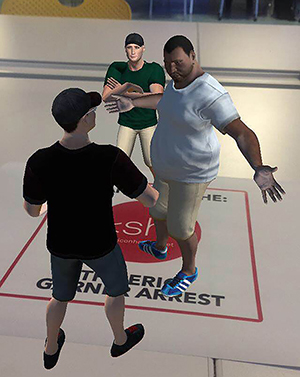
The experience focuses on the controversial events that led to Garner’s death at the hands of police on July 17, 2014. Garner was wrestled to the ground by multiple officers and put in a chokehold by NYPD officer Daniel Pantaleo, which eventually resulted in his death, all of which was captured by eyewitness Ramsey Orta on video.
The experience breaks down the incident into a series of moments that provide the context to the confrontation and background to both Garner and the arresting officer Pantaleo. Garner’s final words, “I can’t breathe” became the rallying cry at protests, as part of the burgeoning Black Lives Matter movement. Published by Silicon Harlem on the second anniversary of Garner’s death. Read more here.
Behind the Trump Empire
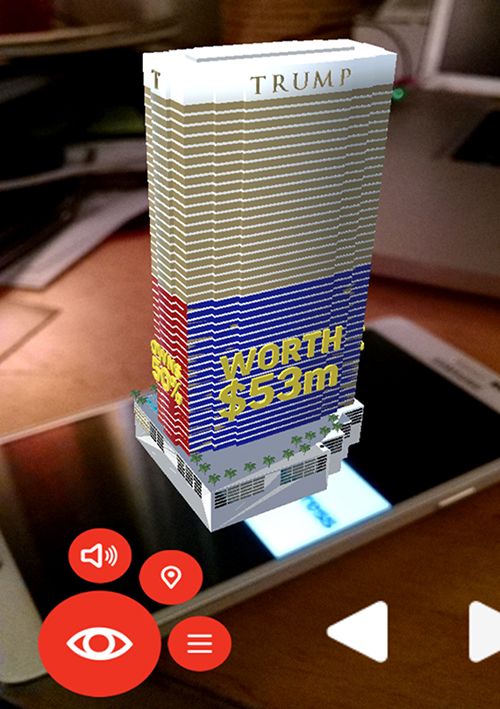
For the Associated Press, we created a interactive infographic breakdown of then Republican presidential candidate Donald Trump’s real estate empire.
From residential apartment complexes, commercial properties to golf courses and branded perfumes, users could uncover the truth behind just how much the real estate tycoon is worth in each of the respective sectors, according to data published by Forbes.